
Project 01 · Case study
Autegro
B2B SaaS Product
2h → 10min
Avg. setup duration
2000+
Leads generated
40+
Live embeds
Starting point
In Germany, mobile.de holds a monopoly position as the online marketplace for cars. Every dealer and every buyer is there, so it can charge very high fees. That is why dealers look for alternative sales channels, their own website for example.
At my company Inception Media we sold a WordPress plugin that integrated a dealer's vehicles from mobile.de onto their own website.
But the plugin had clear limits:
- Setup time: about 1–4 hours
- Loading the vehicles took up to 8 seconds (totally unacceptable these days)
- Only ran on WordPress sites
- Users couldn't set it up on their own
The settings were a problem of their own, hundreds of chaotic options that were never meant for a user to see.
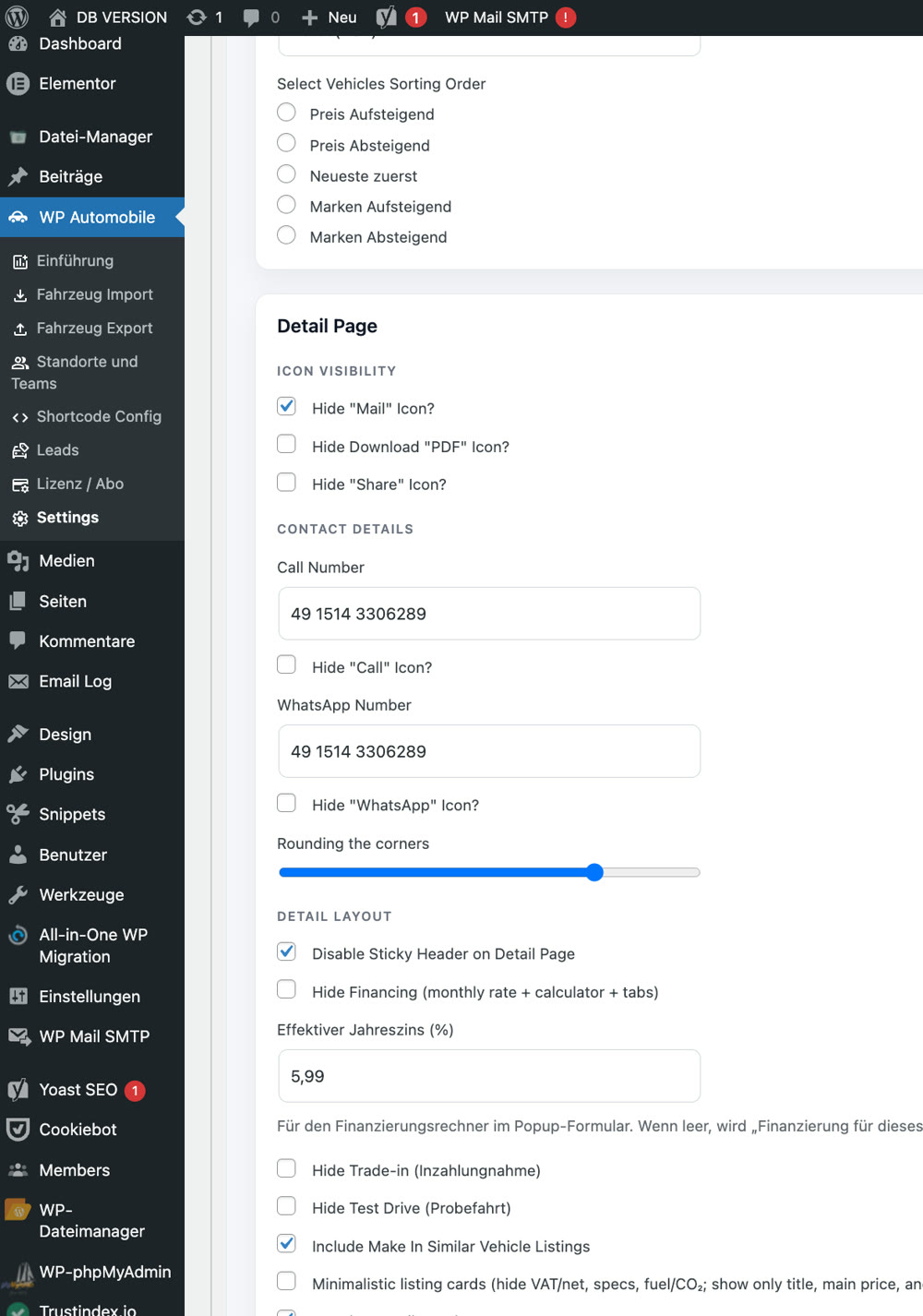
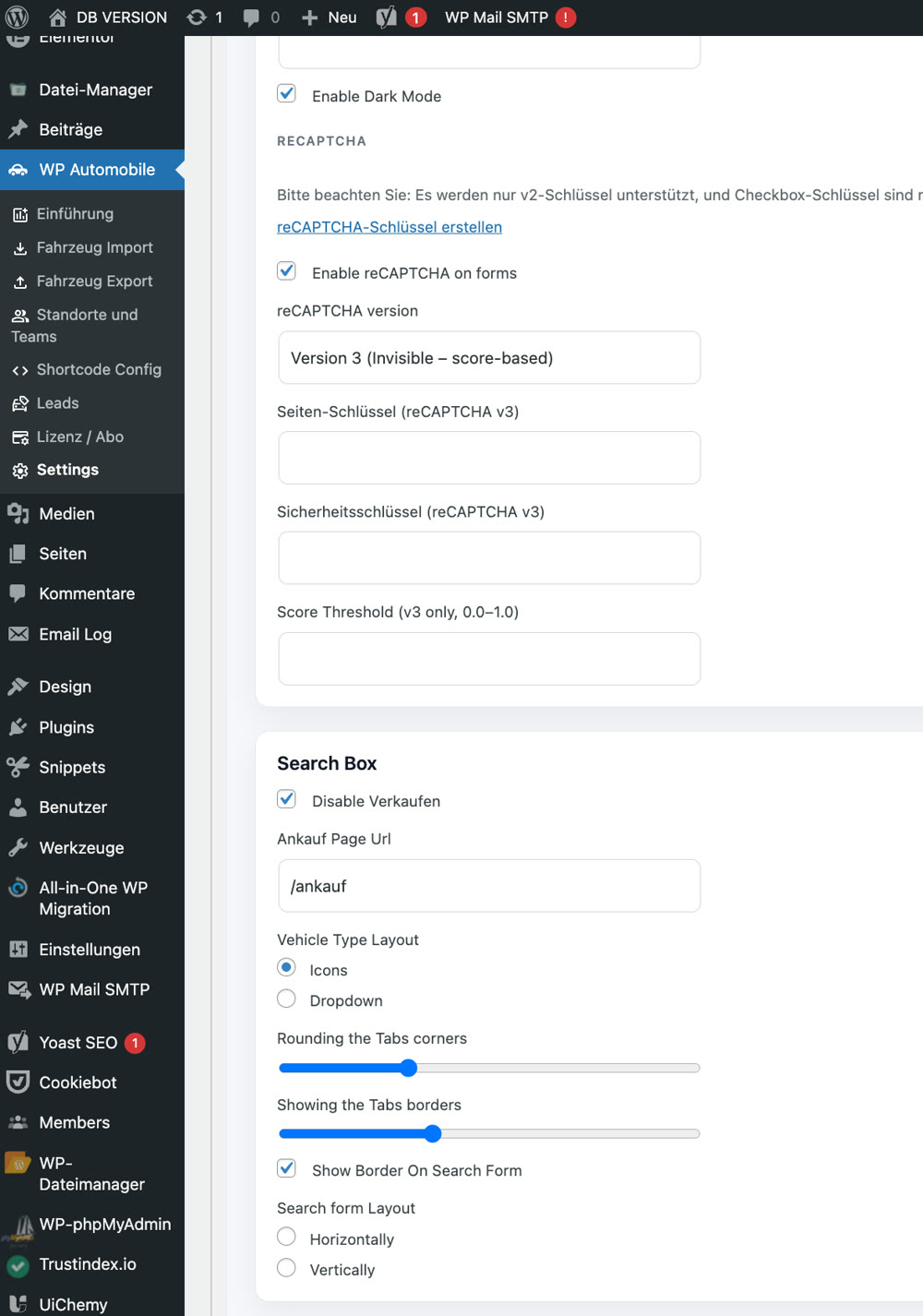
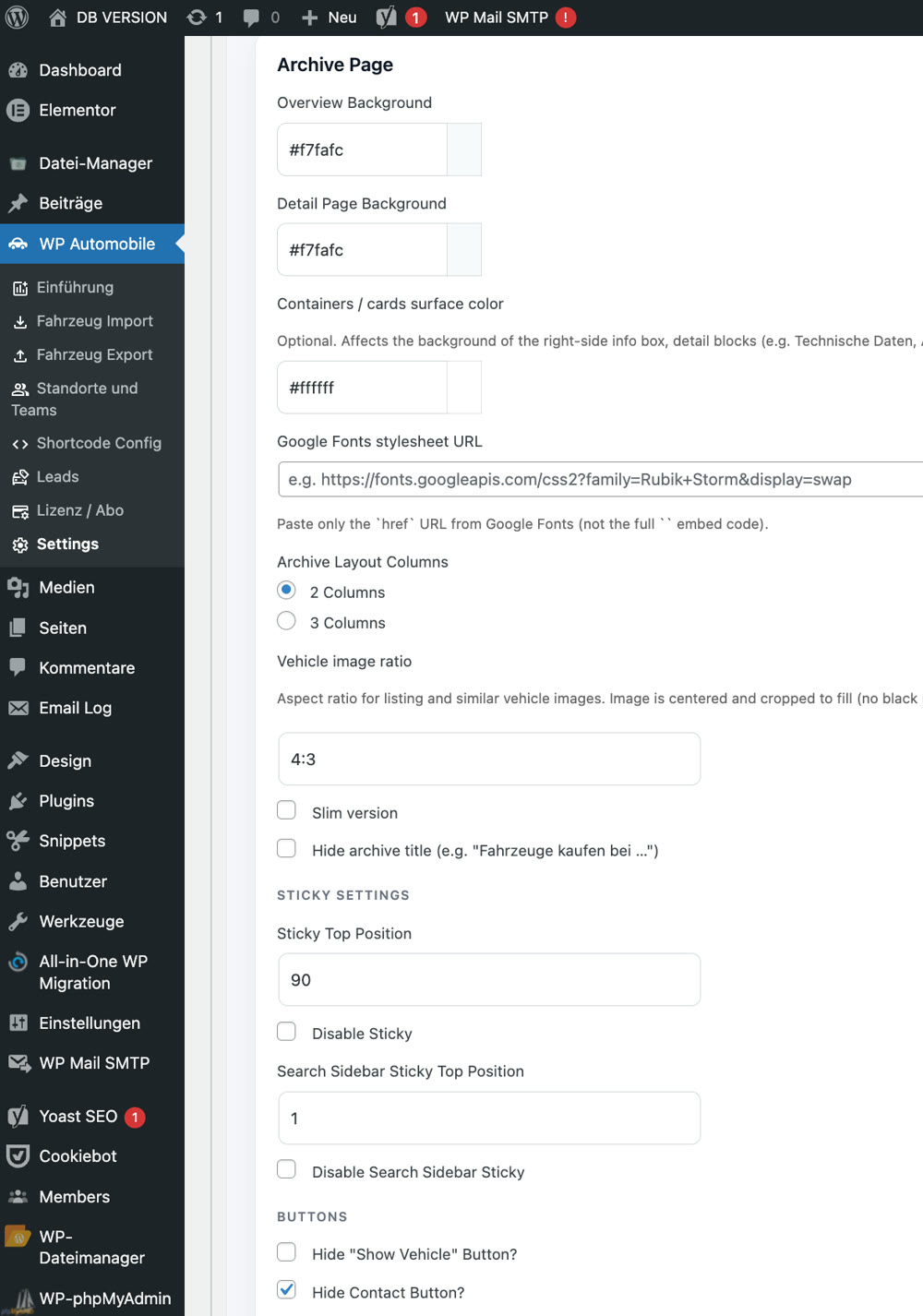
So part of my bachelor thesis was to turn the plugin into a user friendly SaaS product.
- It should be performant
- It should be intuitive enough that non technical car dealers can handle it
My boss had already vibe coded a first prototype, and that was the starting point.
User research
Up to that point I had the prototype, my bosses' opinions and some experience with the plugin. But as a UX designer I wanted to put the user in focus and collect my own data, before we build the wrong thing.
I did three user interviews and a comprehensive survey with 22 dealers.
Insights:
- They won't leave mobile.de, but they would like to if they got inquiries from somewhere else. Our product has market fit
- They want to look different from their competitors. On mobile.de they have no brand identity. Lots of visual flexibility, and it has to adapt to their website
- Inquiry chaos is the biggest pain point: inquiries come in from everywhere and it is hard to keep an overview (phone, mobile.de, mail, in person, etc)
I summed all of it up in one persona: Markus.
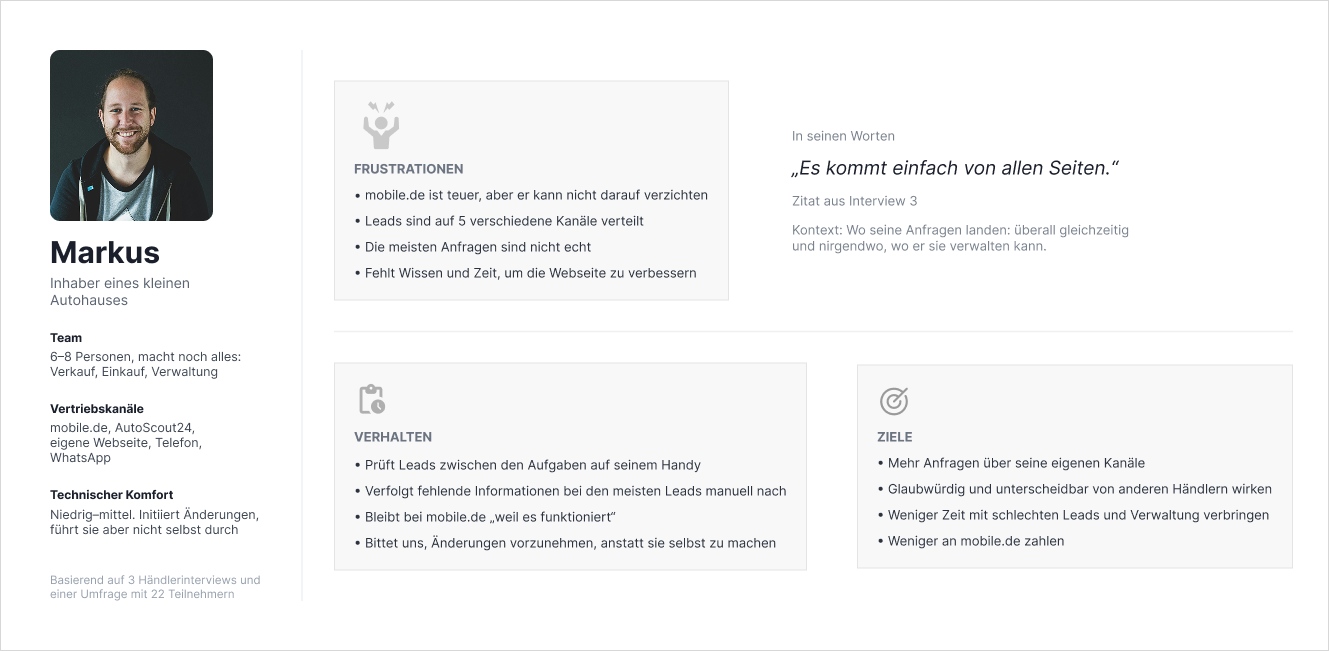
That influenced the product directly:
- The wish to look different: a visual configurator and brand settings
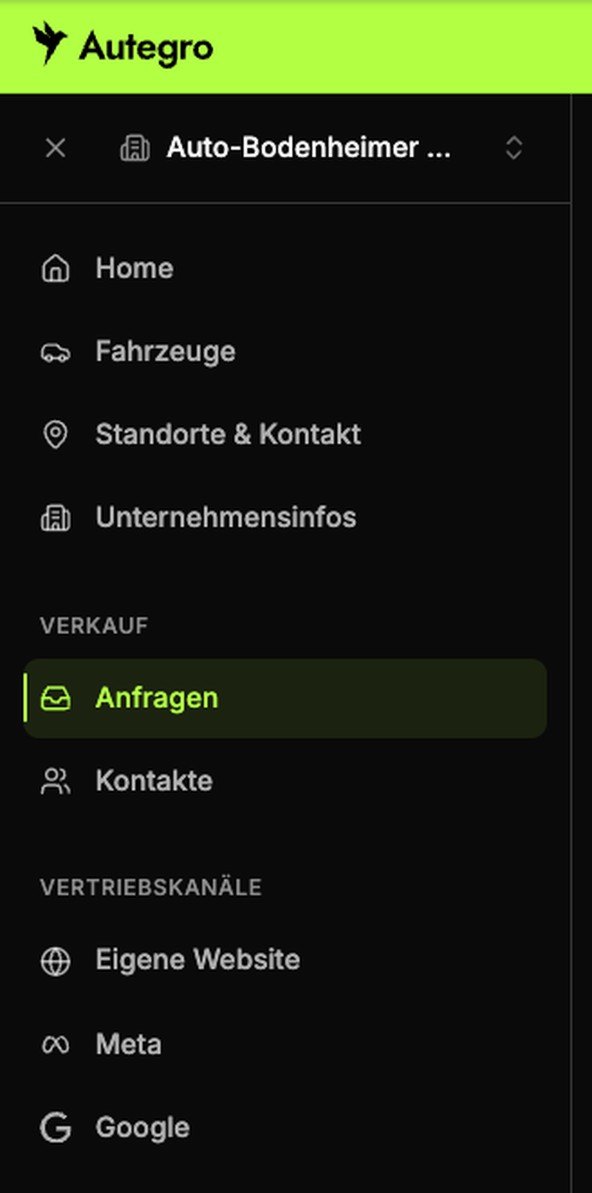
- Inquiry chaos: one central place where all inquiries come together
Brand
Meanwhile we of course also needed a brand identity. As the only designer that was my job, and my boss asked me for a logo, a color palette and a name within a day. I argued for a brand sprint instead. Because I believe a product needs a foundation of values, positioning and so on to be built on.
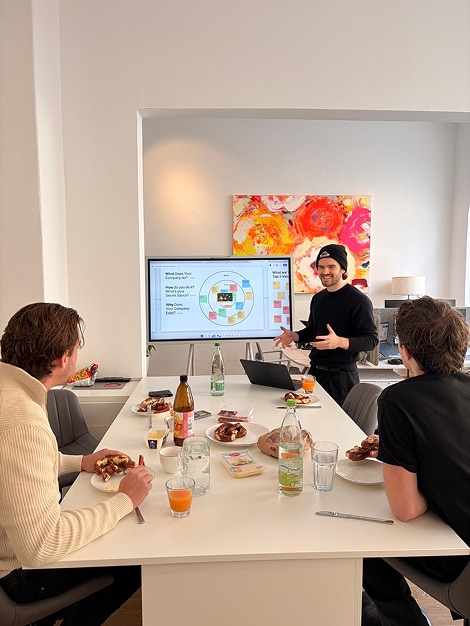

One central sentence came out of the session:
We give dealers the independence to sell more online, through trust and their own brand.
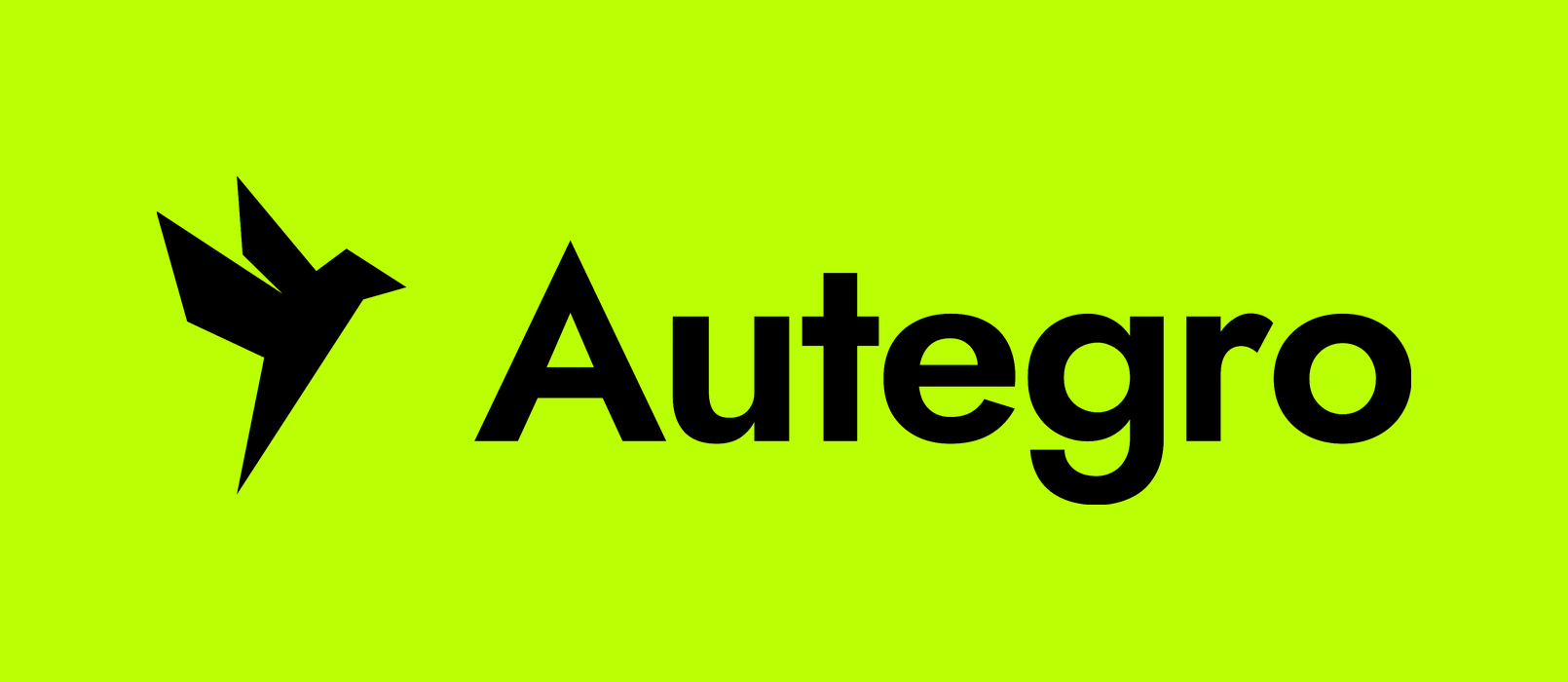
Everything visual followed from that. A bird for independence and momentum, with sharp geometric shapes so it reads as speed and precision, on a performant lime green.
Ideation
A good example of my process was the inquiries tab.
The original prototype of course had a dashboard full of numbers that nobody could act on. My research had shown that dealers had inquiry chaos and don't need even more data, since they have little time as it is. That led to a HMW question:
How might we give a small dealership team a place where they know what needs attention today?
With crazy 8s I produced 14 ideas and scored each one against research evidence, brand fit and feasibility.
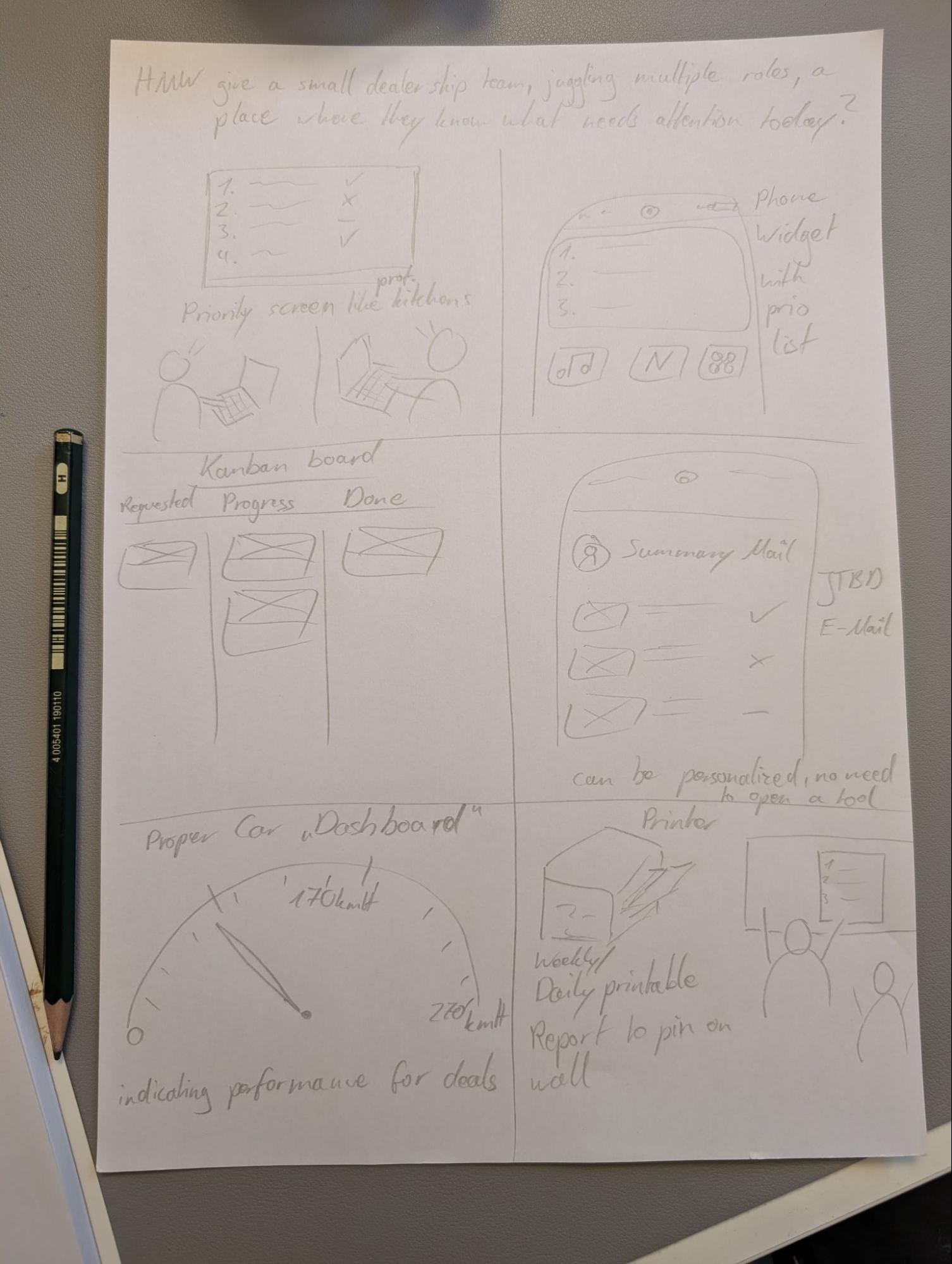
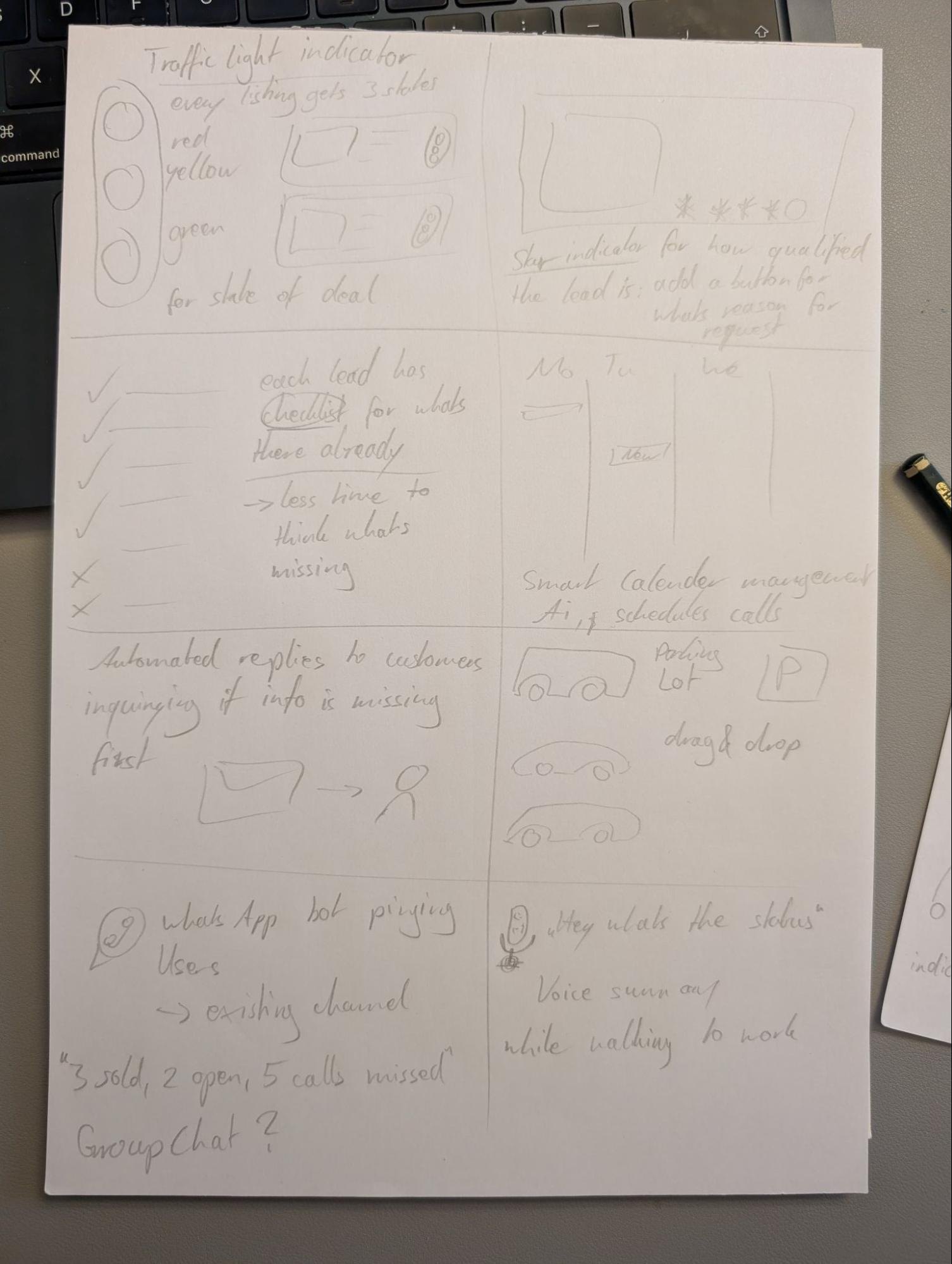
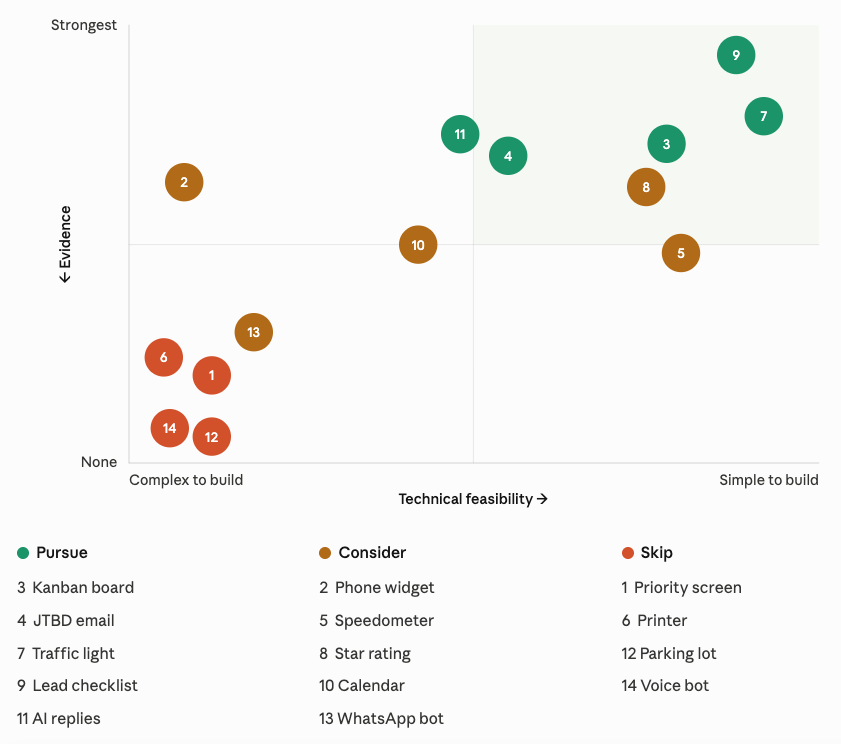
Five of them survived and combined into one board.
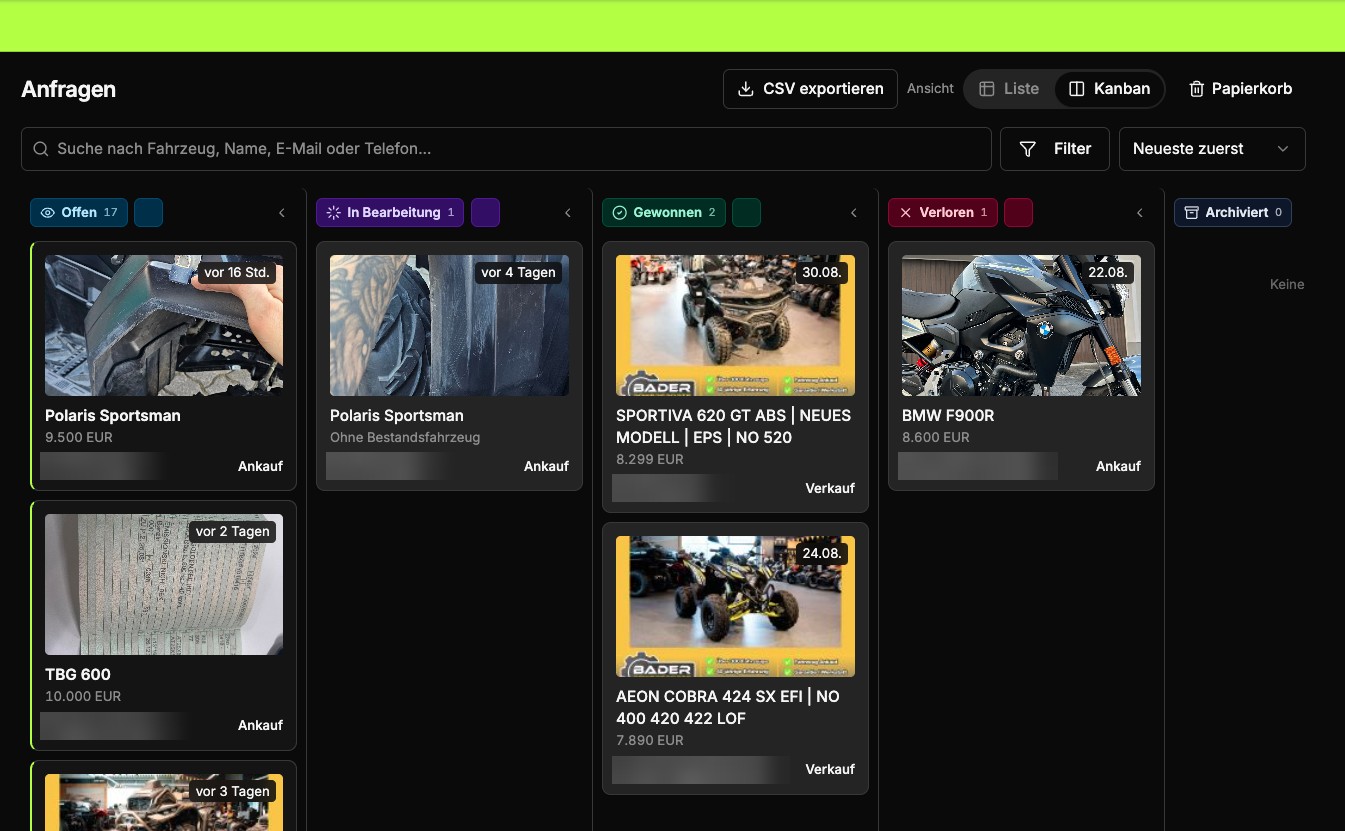
A dashboard would have been the obvious solution. But a dealer who already fills three roles at once needs one clear screen that shows him the status of his inquiries at a glance.
User Testing
I tested the complete setup flow once with 6 first time users.
The testing setup was five steps:
- Create account
- Get mobile.de API credentials
- Copy a code snippet
- Place it on the site
- Match the branding
Some core issues I observed:
- Users didn't understand what a widget was
- They found the widget configurator to be overwhelming
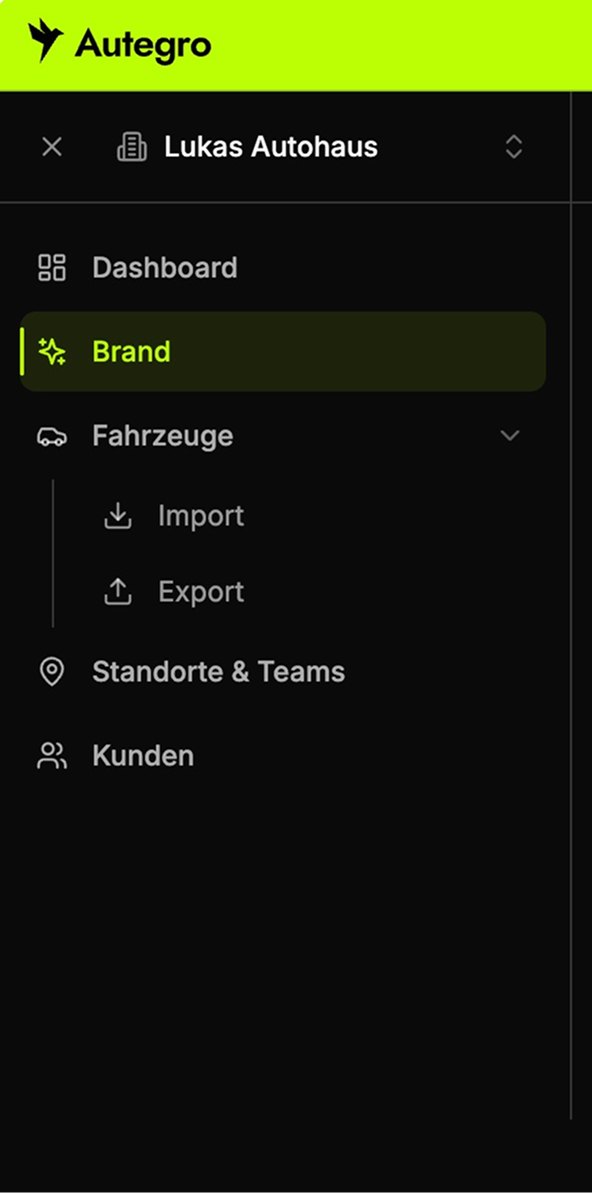
- Didn't have the mental model for Import / Export
Iterations:
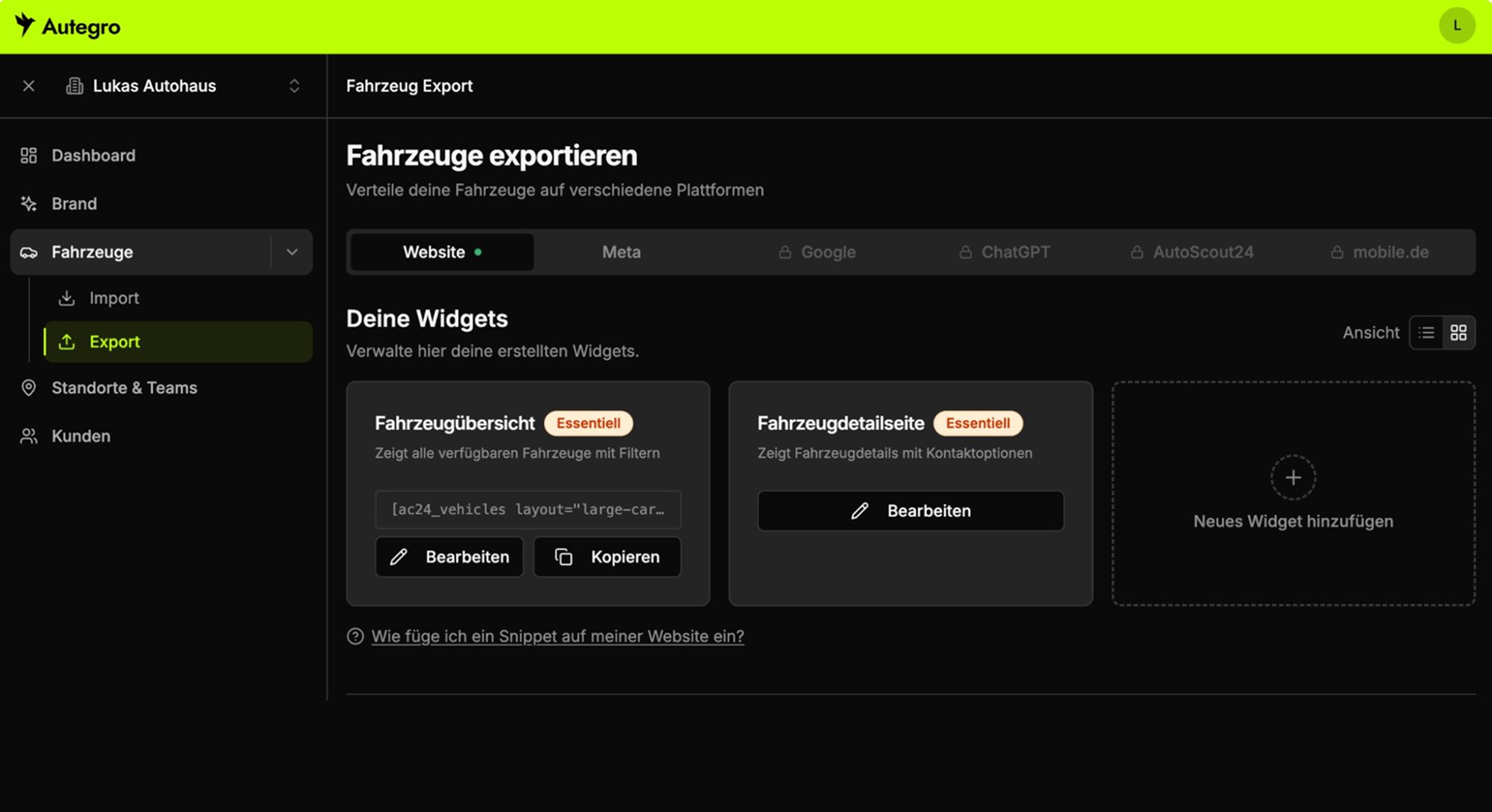
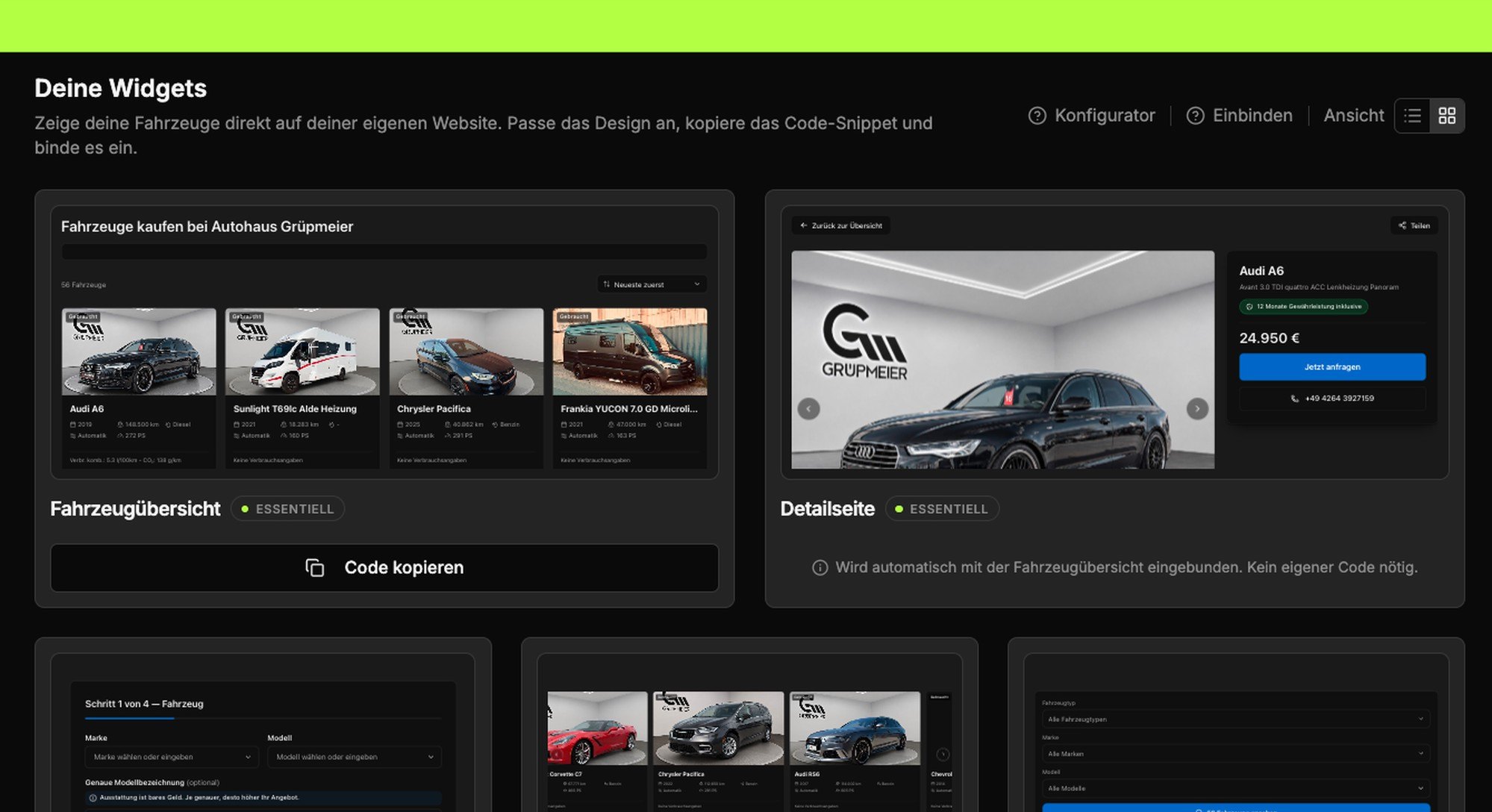
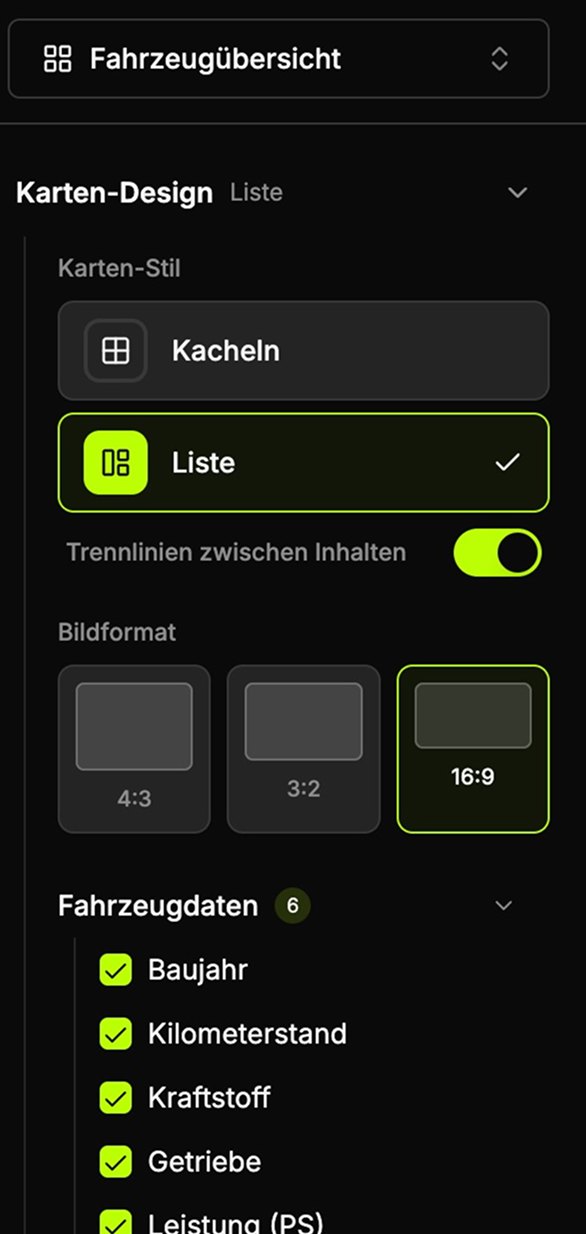
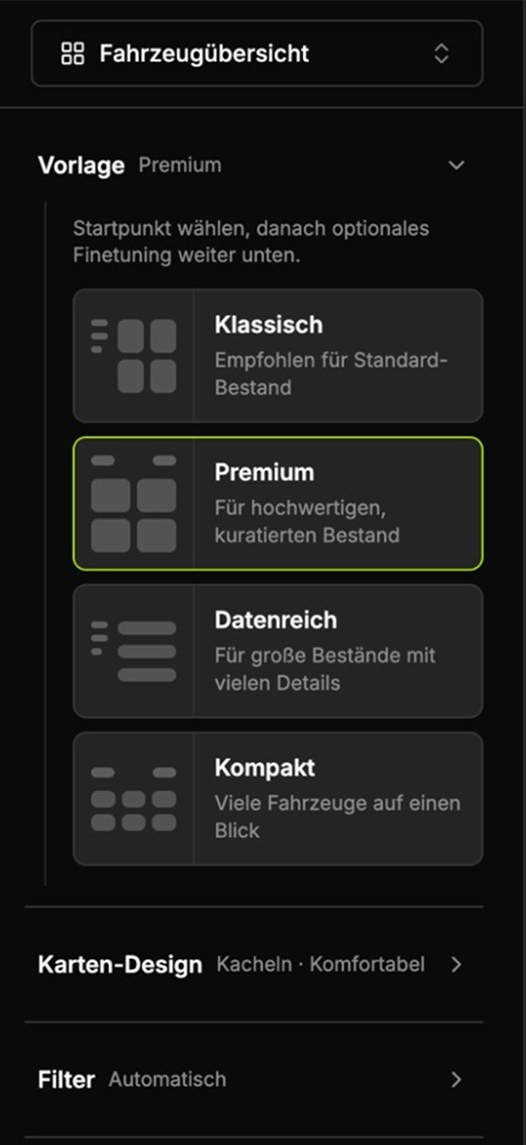
I made a mistake here. The survey showed that dealers want to look different, so I gave them a lot of options in the configurator. But it was perceived as overwhelming, and I hadn't accounted for the fact that dealers don't really have time, or don't want to go into that much detail with the options. The solution was a set of considered templates, with finetuning for power users later.
Outcome
Setting up a dealership went from one to two hours on average in the old plugin to about 10 minutes.
One system now spans a multi role SaaS app, an embeddable widget that adapts to each dealer's identity, and users are already generating more revenue.
Currently over 2000 Leads generated and 40+ live embeds.
The project started as my bachelor thesis. Inception Media hired me full time as their first employee to keep building it.